Tuesday, April 21, 2015

Movie Wish: A Buffy Revamp

So Joss Whedon's still wrapped up with the Avengers, but some of us are still hoping he'll return to the Buffyverse. Here's who I'd think make the perfect movie cast.


BUFFY: Chloe Grace Moretz

XANDER: Ansel Elgort

WILLOW: Maisie Williams

SPIKE: Jamie Campbell-Bower

ANGEL: Theo James

FAITH: Adelaide Kane


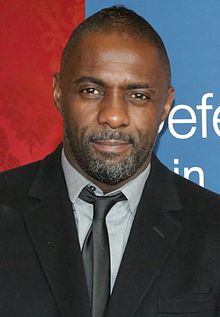
Giles: Idris Elba

Agree? Disagree? Who would you add?

Tuesday, April 7, 2015

Erik Buchanan Author of True Magics

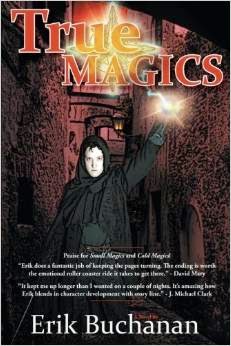
Welcome Erik Buchanan, author of True Magics (March 17, 2015 Dragon Moon Press) http://erikbuchanan.blogspot.com/2015/03/new-true-magics-is-out.html  to It's All About Story.


1) Describe True Magics in one paragraph.

True Magics is the third book of the Thomas Flarety stories. Set in a Renaissance-era world where magic is nearly non-existent, these books tell of Thomas's discovery of magic and the consequences that come from it. In True Magics, Thomas and his friends are recovering from fighting in a war in the north and are attempting to make Eileen the first girl to attend the Royal Academy in 200 years. Everything changes, though, when stories of Thomas's magic reach Hawksmouth. Suddenly, Thomas's friends start disappearing. The king orders Thomas to hide his magic and find the other magicians in the city. The Cult of the Daughter wants Thomas to join them. The Archbishop of the High Father wants Thomas to surrender to the Inquisitors and redeem his soul. Preachers are raging in the streets against witchcraft, the Academy, and the King. The city itself is falling into chaos, and it's up to Thomas to find a way to fix things before the struggle between the king and the Archbishop turns into an all-out war that will destroy everyone and everything he loves.

2) What inspired True Magics?

True Magics is the third book in the series, so part of the inspiration was to finish telling the story! It was also inspired by a lot of stories of survivors of war trying to put their lives back together, and by the struggles of individuals with differences in societies that do not accept them.
Also, once you've written two books about fantasy characters, you really have to write a trilogy or the other writers make fun of you (Joke. Mostly).

3) Is there a specific way magic is depicted?

In this world, my magic is depicted as rare and small. It's also really despised by the church and called witchcraft by those who don't like it. Our hero's magic is greater than most because of the events that happened in Small Magics and in this book he needs to understand the true nature of magic if he's going to survive.

4) Is this your first work of fiction?

This is my third published novel and the eighth I've written. I have published two other novels (Small Magics and Cold Magics) in this series and have written three more under my own name: My first novel (which will never see the light of day), another one that I intend to revise and self-publish in the near future, and a new one that I am happy to start shopping out to publishers in the next couple of months. I've also ghostwritten two other novels.

5) What song or music piece would you put on a soundtrack for True Magics?

Anything by the Chieftains, as that's the music I mostly used when I was writing it. Boil the Breakfast Early is  a favorite.

6) Which character was easy to write? Which was the most difficult?

The most difficult was probably Thomas, our lead, because he goes through a lot of changes in this book and I wanted those to read as real and not contrived. The easiest was probably Henry, because he's fun in a very dangerous kind of way.

7) What is your writing space like? Or can you write anywhere?

I can write anywhere, but I'm usually at my kitchen table, facing the wall that has my whiteboard, calendar, and project list to keep me on track.

8) Any odd writing habits?

Not sure if it's odd, but I have a terrible time writing when there's an internet connection, so I use a program called "Antisocial", which blocks access to social media and to whatever other sites I find myself browsing when I should be working.

9) Do you outline?

I do now. True Magics is the last book I wrote without an outline. Since I started ghostwriting and since I made the decision to make my living solely from my writing, I've found the need for speed has taken over and I no longer have the luxury of exploring my characters during my writing process. Now I do those explorations in the outline, so I don't have to re-write hundreds of pages if something goes awry in my books.

10) What is your favorite fairy tale, myth, or folk tale?

The Odyssey by Homer. It's a wonderful adventure.

11) What is your favorite ficitonal world, one you'd want to visit?

My current favorite is the world in Patrick Rothfuss's King Killer Chronicles. As for which to visit, I want to visit all of them (except for the world of Game of Thrones, because really those folks are mean), but I'd probably start with the Shire in The Hobbit, because I could use a vacation someplace quiet.

12) What is the best writing advice you've ever received?

From the fine author Douglas Smith: "Bum in chair, fingers on keyboard, cursor moving to the left."
Also Stephen King's On Writing is a great read for anyone trying to produce popular fiction.

13) In True Magics, are there any hidden acknowledgements to friends, places you've lived, favorite writers, etc;

Not really, though the weather is a tribute to the springs I remember from my childhood in Nova Scotia.

14) Can you tell us what we have to look forward to after True Magics?

Right now I'm working on a horror/humor novel tentatively titled The Forces of Darkness vs. Bill Righthands Construction and Restoration, which I am hoping to self-publish before the end of the year. I am also shopping around a new YA horror series set in Victorian London, and working on several short stories as well.

Thank you!


Purchase True Magics here: http://www.amazon.com/gp/product/1897492847/ref=as_li_tl?ie=UTF8&camp=1789&creative=390957&creativeASIN=1897492847&linkCode=as2&tag=wwwdragonmo07-20&linkId=FVHYWCUG6PELEIKY


Friday, March 20, 2015

Tim Lees Author of The God Hunter

Welcome, Tim Lees, author of The God Hunter (Harper Voyager Impulse) (https://timlees.wordpress.com/2014/06/13/the-god-hunter/) to It's All About Story.


1) Describe The God Hunter in one paragraph.

This is my elevator pitch is it?
Fossil fuel is running out. But imagine you could mine the psychic energy deposited in churches and other sacred spots, converting it to electricity? That's what Chris Copeland and the Registry Field Ops do. Unfortunately, that energy tends to have a mind of its own, and when one of Chris's operations goes horribly wrong, the consequences will haunt him for years--all the way from Hungary, through London and New York, to the American Midwest.

2)What inspired The God Hunter? What was your inspiration for the gods?

The whole thing came to me very quickly. I noticed a book in my (now) wife's bookcase called Ghost Hunters. It's hardly an unusual title, but for some reason a story just jumped into my head. Still, ghosts have been done to death (ho ho), so I upped the ante a bit by combining it with a concept from my first ever published story, one I've been meaning to return to for years. I wrote the first few chapters in a great rush, sitting under a statue of Joe Dimaggio. (The weather was a bit better then than it is today. As I write this, snow is piled in great grey slag-heaps everywhere you look, and the Chicago winter is doing its best to freeze my knee-caps off. But I digress...)

3)Is this your first work of fiction?

Not by a long way! I've published a fair amount of short fiction--anyone who's interested can track down the e-book collection News from Unknown Countries on Amazon--and the novel Frankenstein's Prescription (Tartarus Press). It's mostly pretty weird.

4)What song or music piece would you put on a soundtrack for The God Hunter?

I've never thought about that! But I think Miles Davis in his Bitches Brew phase might have been pretty good--mysterious, occasionally creepy, and with that kind of abstract, half-glimpsed quality I tried to suggest for some of the gods in the book.

5)Which character was easy to write? Which was the most difficult?

I loved writing Anna Ganz, the foul-mouthed Hungarian detective. She was great fun--feisty, driven, and under-appreciated by her bosses, but with a great sense of justice. I have some interest in the ways people cope with difficult and dangerous jobs--which is one of the things the Field Ops books are about, I suppose--and it was fascinating to watch her gradually reveal her inner self. She seemed to have come from somewhere else, rather than been made up for the purposes of the story.
Conversely, I find the hardest characters to write are the minor ones--someone glimpsed in one paragraph, who needs to be fleshed out with a single line but mustn't intrude too much on the general narrative. My editor pointed out some of my lazier attempts to do this and made me rewrite. It was like being back in school.

6) What is your writing space like? Or can you write anywhere?

When I'm alone in the apartment I just sit in the main room, and am very, very easily distracted. Now, distraction is a necessary thing for writers--often the mind will provide an answer to a problem while the writer's looking elsewhere--but there are times you just have to knuckle down and do your job.
If I'm doing first drafts, or revising from a print-out, I'll often go and sit in a cafe. If it's a first draft, I often have no real notion what I've written until I read it back later. Sometimes, I've been surprised, and I like that.

7)Any odd writing habits?

Writing is a pretty odd habit in itself, isn't it?

8)Do you outline?

Ideally, I outline in my head. The God Hunter and my previous novel, Frankenstein's Prescription, both came to me pretty much whole, at least in terms of general structure. The new novel, Devil in the Wires, wasn't like that. I had some vague notions, but they changed part way through--a minor character took on more significance, and it became clear that, rather than the three interlinked stories I had planned, there was a single narrative struggling to get written. Which, eventually, it did, and the book is much stronger as a result.
I have this weird idea that these books already exist, and I am simply trying to unearth them, like some sort of literary archaeologist. If I do it well, I'll have a good book. If I don't...well. Let's not think about that.

9)What is your favorite fairy tale, myth, or folk tale?

As a kid I was fascinated by the Trojan War. I still find the story of Odysseus intriguing--he's supposedly the first character in literature to have a completely random physical characteristic (short legs), and is therefore a precursor of more modern "realistic" narrative, perhaps. Interestingly, when I read the Odyssey, I found it was mostly a naturalistic piece, and the fantasy elements that everyone knows--the Cyclops, etc--are embedded in it as a kind of boast or tall tale, so there's a suggestion old Odysseus may have just been making it all up.
The character of Odin or Woden is also intriguing, in his aspect as a magic-maker and seeker after wisdom. He hung on the tree for three days and three nights, Odin sacrificed to Odin. That sounds a little like another figure many people still believe in today. It's fascinating how these themes repeat themselves in all cultures, at all times.

10)What is your favorite fictional world, one you'd want to visit?

The last clause rules out most of the ones I've read about. However, Ballard's Vermillion Sands has always seemed appealing: decadent, run-down, surreal, a place where you can be lovesick and unhappy in enormous comfort. I could go for that.

11)What is the best writing advice you've ever received?

"Don't."
I didn't listen.

12)In The God Hunter, are there any hidden acknowledgements to friends, places you've lived, favorite writers, etc;

I think a lot of things just crept in accidentally. I was pretty much improvising most of the way through, with an overall story mapped out in my head. The result was that, when I needed a name, or a character trait, I just reached out and grabbed whatever came to mind. I apologize to anyone who may have been horribly misused thereby.
Len Deighton's early spy thrillers were an influence. That's where the humor came from, and the collision between fantastic adventure and the utterly mundane. I like the idea that my hero is, essentially, an employee. He's not Superman or Indiana Jones, he's just doing his job. Of course, by the end of the book he's had to do a lot more, too, but that's not where he starts out.

13)Can you tell us what we have to look forward to after The God Hunter?


The second Field Ops novel, Devil in the Wires, is due out in May. It follows on chronologically from The God Hunter but I've made sure new readers will be told all they need to know to enjoy it, so it's really a stand-alone sequel. The itinerary for this one is Iraq, Paris, London, and Chicago.
And I should give a plug to C2E2, the Chicago Comics and Entertainment Event. Friday, April 24th, I'm on a panel with the excellent Lexie Dunne discussing "gallows humor". Anyone know any good jokes?

Thank you!


Monday, March 9, 2015

About a Cat


Two years ago, Pooka, a little black thing hiding under the nearest car in my apartment complex, found me. I began feeding him, but he stayed wary. After he ended up on my doorstep bleeding and ragged from a cat attack, I took him to the nearest vet and adopted him.
He was the perfect little gentleman when he wasn't being a wild thing. Even when he was sick, he'd totter to the litter box. He was stubborn, affectionate, and only had to be told once not to jump up on something. He liked to go outside, still, and roam, and I didn't have the heart to refuse him. At night, he'd strut around the apartment with his tail in the air.
He was more like a little fairy thing than a cat. I remember looking out the window during a full moon one night and seeing him sitting in the parking lot as three rabbits hopped toward him. Two went past, but the first touched noses with him before moving on. And he sometimes reminded me of a black fox.
He wasn't only my little buddy, he was also my good luck charm.
A week after I officially adopted Pooka, 7 days exactly, I was contacted by Harper Voyager. I had entered an open submissions call and two days later, I had an agent and a three-book deal. Coincidence? I think not.
I'll miss my little buddy, who was only with me for two years before lung cancer took him in three days. He had to be euthanized, because there was no hope of treatment and he couldn't breathe or eat, even though, that morning, he determinedly trotted after me. He fell asleep in my arms, knowing that I loved him.

Monday, March 2, 2015

Voyager Valentine Contest Update


The winner of my prize has been contacted. Thank you to everyone who entered our contest and met our characters!

Forsan, you are the winner! Please contact me with your mailing information at katherine@katherineharbour.com
Please do so within the next 2 weeks!

Friday, February 27, 2015

Write Advice: How to Write Something by Doing Nothing


There never seems to be enough time to perfect your manuscript. Even if you're hunched over it like some mad scientist in a laboratory, trying to bring it back to life, the more time you spend with it, the less you're able to see it. My mind becomes too cluttered by the story elements. I begin to doubt myself.

One thing I've found extremely helpful is stepping away from the book for awhile, trying to forget about it, and working on something else; short stories, another book. Whether it's a week or two, I don't go near the manuscript. During that time, my brain clears. I even have some eureka moments (which I write down without going near the manuscript.) I also try to immerse myself in the things that inspired the story in the first place, whether it's art, or a film, or another story, or music.

I consider this time off as a vital part of my editing process (and keeping my sanity), even though I don't do anything except occasionally think about the story. When I return to the manuscript, it's all new to me. I'm able to concentrate and edit cold. Thanks to that time away, I can find the story's weaknesses and concentrate on its strengths.

If you can take a week or two away from the dead thing you're trying to resurrect, you'll find that sometimes writing nothing is as important as writing something.

Tuesday, February 17, 2015

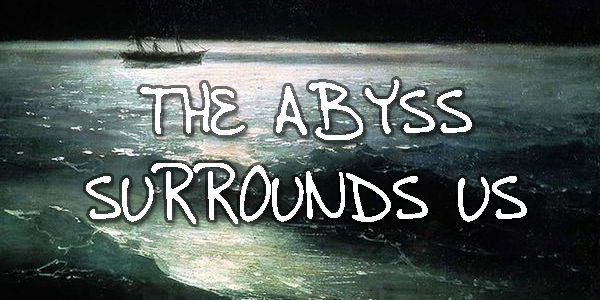
Emily Skrutskie: The Abyss Surrounds Us


Welcome, Emily Skrutskie, author of The Abyss Surrounds Us (Flux 2016) http://skrutskie.com/   to It's All About Story.


1)Describe The Abyss Surrounds Us in one paragraph.

The Abyss Surrounds Us is the story of Cas Leung, a seventeen-year-old who trains genetically-engineered sea monsters to fight pirates. When pirates kidnap her and force her to rear a beast of their own, Cas must decide whether taking vengeance on her captors is worth becoming even more monstrous than the pup she's raising.

2)What inspired The Abyss Surrounds Us?

I came up with the idea for The Abyss Surrounds Us on a bus ride from Bethesda to Ithaca. We were passing some shipyards around Philadelphia and I was thinking about my time out on the West Coast, and the idea just sort of coagulated--sea monsters escorting ships and protecting them in the Pacific Ocean.

3)Is this your first work of fiction?

Nope! I had two novels under my belt before I got to TASU, the first of which I finished when I was fifteen. I had been querying for five years by the time I was ready to jump into the ring with this book, so it was absolutely mind-blowing when it got snapped up right away.

4)What song or music piece would you put on a soundtrack for The Abyss Surrounds Us?

Oh man, I have a whole playlist, but if I had to pick one, it'd be Angel With a Shotgun, by The Cab. https://www.youtube.com/watch?v=rQKMLmXc0xo It's dramatic and bombastic and all about  people throwing away their core values and precepts to defend each other, so it's perfect for TASU.

5)Which character was easy to write? Which was the most difficult?

The easiest to write was the villain, the pirate queen Santa Elena. She was born from the idea that she was "the Beyonce of the sea," and I never had any doubt about what she was. She's vicious, fiercely defensive of the people she cares about, and has a flair for the theatrical--basically, a villainous twist on everything I aspire to be. Writing her came naturally.
Cas was the hardest. This was the first manuscript I have ever written in first person, so I was exploring this new world inhabiting the thoughts and feelings of a character on a level that was way different from what I was used to. Add that to the fact that Cas is at a point in her life where she's still trying to figure out who she is, and you can see how I struggled.

6)What is your writing space like? Or can you write anywhere?

As a Busy College Student (TM), I'm always on the move, which means my writing space is always on the move too. TASU was written and edited in lectures, in libraries, in airports and on planes, at my summer internship out in Santa Monica, and basically everywhere else I could slip my laptop or my sketchbook out and start scribbling. But of all those places, my favorite is my editing desk that I worked from this winter in the Rockies. It has a spectacular view of Boulder Canyon, and it's the warmest place in the house, especially when the woodstove is going.

7)Any odd writing habits?

I solve things by moving. I brainstorm while walking from place to place, and sometimes I'll run up against a problem in a story that I need to work past, and I won't be able to break it until I get up and physically start moving. In the editing process for TASU, I had one scene that was giving me so much trouble that I got up from my chair, cranked up Fall Out Boy's Immortals, and started physically going through the same motions as the characters until I had a clear idea of how to write my way through it.

8)Do you outline?

Absolutely. I don't have pantsing in me--I have to go into a story knowing exactly where the story is going. It took me eight days of pacing around the house to break TASU's story, and I didn't write a word until I had a detailed outline in place.

9) What is your favorite fairy tale, myth, or folk tale?

I was a huge Greek myth nut in high school, so almost all of my favorite stories are from that tradition. I really like the Odyssey. It's such an interesting text, because it's all about the transition of the Greek world from one where gods directly intervene to the modern world where the gods are distant. Also because there's this guy on Odysseus's crew named Elpenor who gets drunk, climbs up on the roof of Circe's house, falls off, and breaks his neck,and everyone forgets about him until they see him in the underworld and are like, "What? You're dead?" and then they have to go back and bury him.

10)What is your favorite fictional world, one you'd want to visit?

In another world, in another life, I was meant to be an Old Republic Jedi.

11)What is the best writing advice you've ever received?

"The first draft of anything is shit." Whether or not Hemmingway actually said it, it's such a critical mindset to have in the drafting process. Not because you should be devaluing your work, but because in order to get anything done, you have to give yourself permission to suck. Getting words on the page is the most important thing. Perfection comes in the edit.

12)In The Abyss Surrounds Us, are there any hidden acknowledgements to friends, places you've lived, favorite writers, etc;?

If you squint at TASU, you can make out hints of my tempestuous relationship with the computer science major. There are also lots of references to the aforementioned Greek myth, especially the story of Persephone.

13)Can you tell us what we have to look forward to after The Abyss Surrounds Us?

Yeah! So The Abyss Surrounds Us is the fist part of a two part story. Cas's journey continues in the sequel, which I'm currently working on. When I finish that, I have a standalone YA sci-fi novel in the oven that I'm describing as something like Battlestar Galactica meets Edge of Tomorrow. Its nickname is Cyborg Space Jam and it's REALLY COOL.

Thank you, Emily!

You can add The Abyss Surrounds Us to your GoodReads lists now: https://www.goodreads.com/book/show/24790901-the-abyss-surrounds-us