Monday, June 27, 2016
Andy Livingstone, author of Hero Born
Welcome, Andy Livingstone, author of the epic fantasy novel Hero Born (Harper Voyager UK) to It's All About Story. You can find Andy's blog here: http://www.andylivingstone.com/blog
Amazon: https://www.amazon.com/Hero-Born-Seeds-Destiny-Book-ebook/dp/B00JIHFFHY
Goodreads: http://www.goodreads.com/book/show/25639951-hero-born
1) Describe Hero Born in one paragraph.
Can the paragraph be 5000 words long, ha ha? (Spot the novelist--I was never cut out for short stories!) Ok then . . . It takes the story of a hero back to where they started, rather than having a ready-made champion with hints at a backstory, and also touches on why we need heroes. It is at its heart a straightforward adventure following the story of one boy, Brann, who is dragged from all he is ever known. A prophesy links him with a vital role in his land's destiny, but all he is trying to do is survive to the end of each day and into the next. Meanwhile, there is a hint of a parallel story at the start of each chapter: a gradually unveiling of another character whose own place destiny just might prove to be linked by fate to Brann's.
2) What inspired Hero Born?
A childhood feasting on all sorts of heroic fantasy, from Tolkien and Gemmell to Le Guin and Lewis, to Eddings and Feist and with any others I could find, some of which proved awful and some brilliant, as well as anything I could get my hands on connected with adventure: Enid Blyton leading to Capt WE Johns leading to Ian Fleming leading to Jack Higgins and Frederick Forsyth . . . and a host of similar authors. Plus, contrary to the way I am now, I was terrible at falling to sleep when I was a child and would stave off the boredom in my bed by imagining a variety of adventurous scenes--the most recurring were similar to Brann's story.
3) Was Hero Born your first work of fiction?
It was my first work of adult-targeted fiction. I previously wrote a series of young children's books based on the adventures of the character Sydney Squirrel, named after my maternal grandfather who gave me The Lord of the Rings when I was a young child myself and told me that one day I would love it. (Please note that my grandpa's unused first name was Sidney; I don't mean that he was a squirrel.)
4) What song or music piece would you put on a soundtrack for Hero Born?
Oh, several and eclectic: Tubthumping, by Chumbawumba; Dream on, by Aerosmith (live version); Blood Red Skies, by Judas Priest; White Blank Page, by Mumford and Sons; Over and Out, by Newton Faulkner; Carry On, by Fun; Battle of Evermore, by Lovemongers, and Chloe Dancer/Crown of Thorns, by Mother Love Bone (These must be played together as that is the first way I heard them and ever since one doesn't seem right without the other); When I Ruled the World, by Coldplay (It sparked the idea for the parallel story at the start of each chapter); This is Way, by Thirty Seconds to Mars; Welcome to the Black Parade, by My Chemical Romance; and Jungleland, by Bruce Springsteen (anything that contains the line "the poets round here don't write nothing at all, they just stand back and let it all be" can't possibly be left out of anything!). There are more, some by the same groups and some by others, but I'm saving them for the soundtrack of the next book!
5) Which character in Hero Born was easy to write? Which was the most difficult?
Brann was the easiest to write--although we see into the heart of him more than all of the other characters combined, he had been in my head for years and was the character that prompted me to write the book, with the story evolving as it grew. Grakk was hard initially until I gave him a personality at odds with his appearance, which just seemed to fit him and after that he flowed much more easily. The consistently most difficult is Gerens, who has the most complicated personality and background. Even I don't fully know him yet. But we will.
6) What is your writing space like? Or can you write anywhere?
I can write anywhere that doesn't have constant interruptions so I can lose myself in the pictures in my head, but my most common writing place is my small study. It has a bookcase, many swords on the walls, an antique desk and, most importantly, a door that shuts.
7) Any odd writing habits? Rituals?
The closest thing to a habit is that I write better with music in the background, though even that is not essential.
8) George R.R. Martin describes 2 kinds of outliners, the Gardener (let it grow) or the Architect (plan it). Which are you?
Definitely the Gardener. I have a rough overview, but the details, large and small, fill themselves in as I go. My imagination doesn't switch off when I am writing--in fact, the writing itself acts as a stimulus for new ideas constantly as I go along. Even if I plan it, it usually takes many different turns than I thought it would. Having said that, I have had to go against the grain somewhat in my third book, which I have started very recently, as it is the final one in the trilogy and so I have to ensure the things I have been building up to, and have been dropping lead-ins to in the previous books, actually take place and make sense. It therefore has more of a plan, though things are bound to change and be adapted as I go along---there's no point in me pretending otherwise.
9) What are some of your favorite world myths or fairy/folk tales? Why?
I grew up from an early age devouring Greek, Roman and Celtic myths and legends (Brann is named after Finn McCool's dog, Bran). However, I constantly returned to the tales of King Arthur and Robin Hood. I loved the language, the characters and the adventures.
10) What is your favorite fictional world,one you'd want to visit?
As a child, Narnia or Middle Earth, but as an adult, Raymond E. Feist's Midkemia.
11) Who is your favorite fictional character?
Aragorn. Always has been.
12) What is the best writing advice you've ever received?
From Mrs. Richmond, my Primary 1 teacher: picture something in your head, then write what you see there. From my dad: think what other people would write, then do something different. And from myself: stop agonizing over every sentence and word--just get the story down and take it from there.
13) In Hero Born, are there any hidden acknowledgements to friends, places you've lived, favorite writers etc?
Not so much in Hero Born, but in the following two books there are/will be. Ask me again once they are out;)
14) What do we have to look forward to after Hero Born?
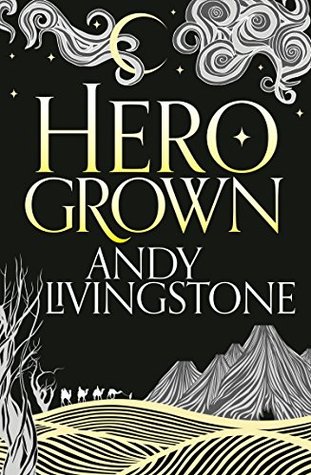
The followup, Hero Grown, continues Brann's adventures and will be published this year (and can be pre-ordered now, plug plug!),https://www.amazon.com/Hero-Grown-Seeds-Destiny-Book-ebook/dp/B0155OP8LG?ie=UTF8&ref_=asap_bc
And I am starting writing the final book in the trilogy, Hero Risen, with a view to it being released next year. I have plans for another two trilogies following Brann's story, so I'll be kept occupied for a wee while yet--and hopefully readers will, too!
Thank you, Andy!
Thank you for having me, Katherine!
Wednesday, June 22, 2016
Endings
ENDING THE STORY
It's never easy for writers to say good-bye to a world, to characters with whom we've spent years. Oh, sure, we can move on to other characters and other worlds, like the fickle friends we are, but making the shift is a little unnerving.
So . . . endings. They're not only a farewell, they're also feats of engineering, especially if it's the finale of a story arc. Here are three ways to end a story: Happy, tragic, bittersweet.
HAPPY ENDING: It's perfect for a fairy tale or a romance. It's more effective if the protagonist's journey has been perilous and dark: Snow White. Beauty and the Beast. Well, those you expect. The ending of the first True Detective series was a surprise. An unexpected happy ending after a very dark tale is almost subversive.
TRAGIC: Tragic endings are memorable. They can be either sad or horrifying. Romeo and Juliet. Wuthering Heights by Emily Bronte. Of Mice and Men by John Steinbeck. Romances and fiction novels become more compelling with tragic endings. With horror, a shocking ending used to be standard, when the supposedly defeated monster would show up at the end.
BITTERSWEET: This was the ending I chose for The Night and Nothing series. A bittersweet ending works for dark stories and stories where the reader expects a happy conclusion: Peter Pan. John Green's The Fault in Our Stars and Paper Towns. The film The Breakfast Club. Not many readers think beyond "And they lived happily ever after." And a tragic ending is too final. Bittersweet allows the story to continue in the readers' imaginations.
Tying up loose ends. Checking that all of your characters have been taken care of. Letting the theme of the tale echo. An ending is as important as the beginning, and we writers want it to haunt or delight our readers for days afterward.
Saturday, June 18, 2016
Summer Contests
I'll be running 4 CONTESTS this summer, celebrating faeries and fairy tales, so keep an eye out for the finale!
FIRST CONTEST
The prize to be given to ONE winner includes:
1)A signed ARC of Nettle King
2)A Cinderella journal
3)A sugar skull notepad
4)A Lucky Troll doll.
All you need to do is one of these: Tweet about the contest, Follow me on Twitter, check out my Facebook Author Page, or post a blog comment about what you loved about Thorn Jack or Briar Queen.
CONTEST ONLY OPEN TO RESIDENTS OF U.S. AND CANADA.
a Rafflecopter giveaway
FIRST CONTEST
The prize to be given to ONE winner includes:
1)A signed ARC of Nettle King
2)A Cinderella journal
3)A sugar skull notepad
4)A Lucky Troll doll.
All you need to do is one of these: Tweet about the contest, Follow me on Twitter, check out my Facebook Author Page, or post a blog comment about what you loved about Thorn Jack or Briar Queen.
CONTEST ONLY OPEN TO RESIDENTS OF U.S. AND CANADA.
a Rafflecopter giveaway
Thursday, June 9, 2016
Laura Liddell Nolen, author of The Ark
Welcome Laura Liddell Nolen, author of the YA SF novel The Ark (HarperVoyager UK) to It's All About Story.
Laura's blog: http://www.lauraliddellnolen.com/
Amazon: https://www.amazon.com/Ark-Trilogy-Book-ebook/dp/B00O0FY6B0
Goodreads: http://www.goodreads.com/book/show/25066493-the-ark
Hi, Katherine! I'm a big fan of yours, so it's great to be here!
1) Thank you! Describe The Ark in one paragraph.
Charlotte Turner is trapped in prison on the last day of Earth during a world-destroying meteor strike. She has screwed up so many times that she is no longer eligible for a place on an Ark, a massive bioshop designed to protect Earth's survivors.
Her final wish is that her family will visit her before they leave, so that she can apologize to them for all the pain her decisions have brought them. Her goodbyes turn into something much more complicated, and Char decides to try to break out of prison and stow away on a spaceship, even knowing that she'd be relegated to life as a criminal and noncitizen, in hopes that one day, her family will forgive her.
2) What inspired The Ark?
The Ark is a story about redemption. In that sense, it was inspired by The Count of Monte Cristo, and by all the fun I had reading sci-fi adventures growing up.
I'm also fascinated by hypothetical apocalyptic events and the breaking down of polite society during a paradigm shift, so I had a lot of fun imagining the end of the world.
3) Was The Ark your first work of fiction?
I . . . I cannot lie. I may have written a "practice" novel before this one. But you'll never be able to prove it.
4) What song or music piece would you put on a soundtrack for The Ark?
That's a tough one, so I gotta pick three: The Unforgiven I, II, and III.
I love Metallica's music, and this series in particular captures the pain, desperation, and ultimate acceptance that run through many of their songs. It ties in really well with Char's story, too! In the first two songs, the speaker places the blame for his anguish squarely on others--society and a woman, respectively. In "Unforgiven III," his perspective undergoes a radical shift, and he seems to condemn himself far more than everyone else. He's contemplating the decisions he's made and how they've shaped his life and his relationship with the darkness that constantly threatens to overwhelm him. "The Unforgiven II" has an undercurrent of guilt as well, but in the third song, Hetfield's introspection forces him through the darkness and toward something closer to acceptance.
5) Which character in The Ark was easy to write? Which was the most difficult?
Char was, by far, the easiest to write. I'm working on the third book right now, and I feel like I've known her for years, and we're about to reach this final goal together.
The hardest was Isaiah. My concept for him, from the beginning, was someone with clear principles that run counter to his personal desires. Isaiah is strong because he will always, always choose the greater good over his own advancement. His idealism is not always good, in an immediate sense, for the people he loves the most, but he rarely wavers. Although that's the kind of person I want to be, it's sometimes hard to relate to, especially because of the pain it brings him. I had to make his choices believable, and I hope I've done that.
6) What is your writing space like? Or can you write anywhere?
I like to write in a public place where there's a nice, steady hum of background noise. Writing is isolating enough without forcing myself into hermitage for months at a time.
7) Any odd writing habits? Rituals?
Earplugs. I have boxes of them in my laptop bag. For some reason, wearing them helps me stay focused and off the internet during my workday. I know that's ridiculous, but hopefully my inner procrastinator never gets wise to that trick.
8) George R. R. Martin describes 2 kinds of outliners, the Gardener (let it grow) or the Architect (plan it.) Which are you?
Alas, I'm an Architect who longs to be more of a Gardener. I love it when my stories take a spontaneous turn.
9) What are some of your favorite world myths or fairy/folk tales? Why?
I like the Tam Lin ballad, and your retelling of it in particular. At the other end of the spectrum, I have a funny relationship with Belle from Beauty and the Beast. I appreciate the redemptive aspects of that story, but I don't understand her choices.
10) What is your favorite fictional world, one you'd want to visit?
Must not say Hogwarts. Must be original. Must not say Hogwarts. Must be . . . UGH Hogwarts. It's Hogwarts.
11) Who is your favorite fictional character?
I like Professor Sno--Mulan. She is brave and strong.
12) What is the best writing advice you've ever received?
"Writing is the art of applying the seat of the pants to the seat of the chair." -Mary Heaton Vorse, as conveyed to me by my good friend and author Benjamin Morris. Aaannnnd we're back to my constant battle against procrastination. I think all the best writing books mention this concept at some point, and I've tried to take it to heart. For example, Stephen King says he writes every single day, including Christmas. That is a lot of chair time.
13) In The Ark, are there any hidden acknowledgements to friends, places you've lived, favorite writers, etc.
Yes,and the best part of my day is when I get a text from someone I love saying "I found me!!"
14) Can you tell us anything else about your writing experiences?
One of the best things about this job is meeting and interacting with other writers. The writing community is utterly huge, but surprisingly supportive. I love how we look out for each other.
15) What do we have to look forward to after The Ark?
The Remnant, the second book in The Ark trilogy, is out in July! (Amazon:https://www.amazon.com/Remnant-Ark-Trilogy-Book-ebook/dp/B01AOXHTLA?ie=UTF8&ref_=asap_bc) Char has a long way to go before she finds what she's looking for.
Thank you, Laura!
Thanks to you too!
Laura's blog: http://www.lauraliddellnolen.com/
Amazon: https://www.amazon.com/Ark-Trilogy-Book-ebook/dp/B00O0FY6B0
Goodreads: http://www.goodreads.com/book/show/25066493-the-ark
Hi, Katherine! I'm a big fan of yours, so it's great to be here!
1) Thank you! Describe The Ark in one paragraph.
Charlotte Turner is trapped in prison on the last day of Earth during a world-destroying meteor strike. She has screwed up so many times that she is no longer eligible for a place on an Ark, a massive bioshop designed to protect Earth's survivors.
Her final wish is that her family will visit her before they leave, so that she can apologize to them for all the pain her decisions have brought them. Her goodbyes turn into something much more complicated, and Char decides to try to break out of prison and stow away on a spaceship, even knowing that she'd be relegated to life as a criminal and noncitizen, in hopes that one day, her family will forgive her.
2) What inspired The Ark?
The Ark is a story about redemption. In that sense, it was inspired by The Count of Monte Cristo, and by all the fun I had reading sci-fi adventures growing up.
I'm also fascinated by hypothetical apocalyptic events and the breaking down of polite society during a paradigm shift, so I had a lot of fun imagining the end of the world.
3) Was The Ark your first work of fiction?
I . . . I cannot lie. I may have written a "practice" novel before this one. But you'll never be able to prove it.
4) What song or music piece would you put on a soundtrack for The Ark?
That's a tough one, so I gotta pick three: The Unforgiven I, II, and III.
I love Metallica's music, and this series in particular captures the pain, desperation, and ultimate acceptance that run through many of their songs. It ties in really well with Char's story, too! In the first two songs, the speaker places the blame for his anguish squarely on others--society and a woman, respectively. In "Unforgiven III," his perspective undergoes a radical shift, and he seems to condemn himself far more than everyone else. He's contemplating the decisions he's made and how they've shaped his life and his relationship with the darkness that constantly threatens to overwhelm him. "The Unforgiven II" has an undercurrent of guilt as well, but in the third song, Hetfield's introspection forces him through the darkness and toward something closer to acceptance.
5) Which character in The Ark was easy to write? Which was the most difficult?
Char was, by far, the easiest to write. I'm working on the third book right now, and I feel like I've known her for years, and we're about to reach this final goal together.
The hardest was Isaiah. My concept for him, from the beginning, was someone with clear principles that run counter to his personal desires. Isaiah is strong because he will always, always choose the greater good over his own advancement. His idealism is not always good, in an immediate sense, for the people he loves the most, but he rarely wavers. Although that's the kind of person I want to be, it's sometimes hard to relate to, especially because of the pain it brings him. I had to make his choices believable, and I hope I've done that.
6) What is your writing space like? Or can you write anywhere?
I like to write in a public place where there's a nice, steady hum of background noise. Writing is isolating enough without forcing myself into hermitage for months at a time.
7) Any odd writing habits? Rituals?
Earplugs. I have boxes of them in my laptop bag. For some reason, wearing them helps me stay focused and off the internet during my workday. I know that's ridiculous, but hopefully my inner procrastinator never gets wise to that trick.
8) George R. R. Martin describes 2 kinds of outliners, the Gardener (let it grow) or the Architect (plan it.) Which are you?
Alas, I'm an Architect who longs to be more of a Gardener. I love it when my stories take a spontaneous turn.
9) What are some of your favorite world myths or fairy/folk tales? Why?
I like the Tam Lin ballad, and your retelling of it in particular. At the other end of the spectrum, I have a funny relationship with Belle from Beauty and the Beast. I appreciate the redemptive aspects of that story, but I don't understand her choices.
10) What is your favorite fictional world, one you'd want to visit?
Must not say Hogwarts. Must be original. Must not say Hogwarts. Must be . . . UGH Hogwarts. It's Hogwarts.
11) Who is your favorite fictional character?
I like Professor Sno--Mulan. She is brave and strong.
12) What is the best writing advice you've ever received?
"Writing is the art of applying the seat of the pants to the seat of the chair." -Mary Heaton Vorse, as conveyed to me by my good friend and author Benjamin Morris. Aaannnnd we're back to my constant battle against procrastination. I think all the best writing books mention this concept at some point, and I've tried to take it to heart. For example, Stephen King says he writes every single day, including Christmas. That is a lot of chair time.
13) In The Ark, are there any hidden acknowledgements to friends, places you've lived, favorite writers, etc.
Yes,and the best part of my day is when I get a text from someone I love saying "I found me!!"
14) Can you tell us anything else about your writing experiences?
One of the best things about this job is meeting and interacting with other writers. The writing community is utterly huge, but surprisingly supportive. I love how we look out for each other.
15) What do we have to look forward to after The Ark?
The Remnant, the second book in The Ark trilogy, is out in July! (Amazon:https://www.amazon.com/Remnant-Ark-Trilogy-Book-ebook/dp/B01AOXHTLA?ie=UTF8&ref_=asap_bc) Char has a long way to go before she finds what she's looking for.
Thank you, Laura!
Thanks to you too!
Saturday, June 4, 2016
Pinkie's Picks: Orpheus by Charles Mikolaycak
PINKIE'S PICK
ORPHEUS by Charles Mikolaycak
I bought this picture book in the children's department, but it's definitely a book for teens or anyone interested in Greek myth. With its story of doomed love and a romantic hero, Orpheus's illustrations are beautiful, reminiscent of Maxfield Parrish. The story, the Greek myth about a young musician who attempts to rescue his beloved Eurydice from the underworld and fails, is poignantly written. I've included Orpheus as one of Pinkie's Picks because it's a picture book for those of us who love fantasy. And picture books!
Monday, May 30, 2016
Christi J. Whitney, Author of GREY and SHADOW
Welcome, Christi J. Whitney, author of the YA novels Grey and Shadow (Harper Voyager) to It's All About Story. Christi's website: http://christijwhitney.com/
Amazon: https://www.amazon.com/Grey-Romany-Outcasts-Book-1-ebook/dp/B00MT9E66E?ie=UTF8&btkr=1&ref_=dp-kindle-redirect
Goodreads: http://www.goodreads.com/book/show/26115230-grey
1) Describe Grey in one paragraph.
Grey is a YA fantasy, the first installment in The Romany Outcasts series. Sebastian Grey always thought he was a fairly normal teenager--good friends, decent grades and a pretty sweet job in his foster brother's tattoo shop. But when Romany gypsies arrive in town, Sebastian discovers that his world is not what it seems. There is an age-old feud between his family and the gypsies--and this isn't the only secret his brother has been keeping from him. His life is not his own. The girl he's been dreaming about has just turned up at school, and he feels compelled to protect her at all costs. even if that means life might never be normal again.
2) What inspired Grey?
Grey was inspired by several things, actually. First, I'd always wanted to write a fantasy novel, but something that was set in the real world. I also love the classic themes in the fairy tale Beauty and the Beast, and I wanted to do a little bit of my own take on them. And last, I'd had the character of Sebastian in my head for a long time. He really represents the type of character I've always been drawn to in books, television, and films.
3) Was Grey your first work of fiction?
It was! I'd written other things before Grey, but this was the first novel I'd actually seen to completion and really got serious about publishing.
4) What song or music piece would you put on a soundtrack for Grey?
Oh, tough one! I have a really long playlist for the entire Romany Outcasts Series. But if I had to narrow it down for just Grey, it would probably be a tie between Turning on My Own by Satellite and one of the newer additions to my list: Who Am I by Andrew Judah.
5) Which character in Grey was easy to write? Which was the most difficult?
The main character Sebastian was, by far, the easiest to write. I don't know if it's because we share some similarities or because we sometimes think alike, but I just found his head to be so easy to slip into. There's just something about writing him that flowed. Josephine was sometimes the toughest to write, mainly because the reader is seeing her through Sebastian's eyes, and he is limited in what he knows and experiences.
6)What is your writing space like? Or can you write anywhere?
I can honestly write anywhere, and I often have to. But where I'm most productive is probably my little office space upstairs in my house. It's my little geek sanctuary, filled with all things sci-fi, fantasy, and pop culture.
7) Any odd writing habits? Rituals?
I don't know if I have anything odd. I prefer to write with music, and I have a bad habit of not keeping a lot of first draft materials that I write. I delete pretty quickly, which I didn't think was weird until someone in my critique group pointed it out. She has files of unused material that she keeps.
8) George R. R. Martin describes 2 kinds of outliners, the Gardener (let it grow) or the Architect (plan it). Which are you?
Definitely the Gardener. I feel boxed in when I plan to much,and it sucks the creativity out of me. But, I always hit that point where I have to put on the brakes and plot things out and weave ideas together. I'm having to do that a lot more with book three in this series than I did with the other two.
9) What are some of your favorite world myths or fairy/folk tales? Why?
As I touched on in an earlier question, I have a soft spot in my heart for any retelling of the classic Beauty and the Beast tale. I love stories of transformation, inner struggles, and redemption. I also love themes dealing with not judging a book by its cover.
10) What is your favorite fictional world, one you'd want to visit?
There are just so many out there! I"ll go with one of the first to capture my heart: Narnia.
11) Who is your favorite fictional character?
This is like choosing a favorite child. I adore Puddleglum from The Silver Chair, and I found myself drawn to the character of Raistlin in the Dragonlance Series when I was in high school. I loved Wil Omsford in the Shannara Series. Probably my two favorite characters in recent YA fiction are Peeta Mellark from The Hunger Games Trilogy, and Simon Lewis from The Mortal Instruments series.
12) What is the best writing advice you've ever received?
"It's okay to write crap."
13) In Grey, are there any hidden acknowledgements to friends, places you've lived, favorite writers etc;
There are several, actually. I was teaching high school drama at the time I wrote Grey and several students found their way into my book. The character of Katie is probably the most spot-on to a student I had in class. A few co-workers ended up in the book as well. The town of Sixes where Grey takes place is based on a community that existed here around the turn of the century, not far from where I live. And, lastly, I give a shout-out to the novel The Hunchback of Notre Dame with a couple of characters' names.
14) Can you tell us anything else about your writing experiences?
It's been a really long road to publication--actually, more like a massively scary rollercoaster ride, but I'm grateful to be where I am, and I owe so much of that to having a fantastic critique group. We've been together for over four years now, and it's the best thing to ever happen to me as a writer. If you are a writer and don't have a critique partner or group, I encourage you to find one.
15) What do we have to look forward to after Grey?
I'm super excited about the e-book release of Shadow on June 2. Shadow is the second installment in The Romany Outcasts Series, and it continues the stories of Sebastian and Josephine. Midnight, the third book in the trilogy, is due out in the spring of 2017.
Amazon: https://www.amazon.com/Shadow-Romany-Outcasts-Book-2-ebook/dp/B0155OP8MK/ref=sr_1_1?s=digital-text&ie=UTF8&qid=1464623318&sr=1-1
Thank you, Christi!
Amazon: https://www.amazon.com/Grey-Romany-Outcasts-Book-1-ebook/dp/B00MT9E66E?ie=UTF8&btkr=1&ref_=dp-kindle-redirect
Goodreads: http://www.goodreads.com/book/show/26115230-grey
1) Describe Grey in one paragraph.
Grey is a YA fantasy, the first installment in The Romany Outcasts series. Sebastian Grey always thought he was a fairly normal teenager--good friends, decent grades and a pretty sweet job in his foster brother's tattoo shop. But when Romany gypsies arrive in town, Sebastian discovers that his world is not what it seems. There is an age-old feud between his family and the gypsies--and this isn't the only secret his brother has been keeping from him. His life is not his own. The girl he's been dreaming about has just turned up at school, and he feels compelled to protect her at all costs. even if that means life might never be normal again.
2) What inspired Grey?
Grey was inspired by several things, actually. First, I'd always wanted to write a fantasy novel, but something that was set in the real world. I also love the classic themes in the fairy tale Beauty and the Beast, and I wanted to do a little bit of my own take on them. And last, I'd had the character of Sebastian in my head for a long time. He really represents the type of character I've always been drawn to in books, television, and films.
3) Was Grey your first work of fiction?
It was! I'd written other things before Grey, but this was the first novel I'd actually seen to completion and really got serious about publishing.
4) What song or music piece would you put on a soundtrack for Grey?
Oh, tough one! I have a really long playlist for the entire Romany Outcasts Series. But if I had to narrow it down for just Grey, it would probably be a tie between Turning on My Own by Satellite and one of the newer additions to my list: Who Am I by Andrew Judah.
5) Which character in Grey was easy to write? Which was the most difficult?
The main character Sebastian was, by far, the easiest to write. I don't know if it's because we share some similarities or because we sometimes think alike, but I just found his head to be so easy to slip into. There's just something about writing him that flowed. Josephine was sometimes the toughest to write, mainly because the reader is seeing her through Sebastian's eyes, and he is limited in what he knows and experiences.
6)What is your writing space like? Or can you write anywhere?
I can honestly write anywhere, and I often have to. But where I'm most productive is probably my little office space upstairs in my house. It's my little geek sanctuary, filled with all things sci-fi, fantasy, and pop culture.
7) Any odd writing habits? Rituals?
I don't know if I have anything odd. I prefer to write with music, and I have a bad habit of not keeping a lot of first draft materials that I write. I delete pretty quickly, which I didn't think was weird until someone in my critique group pointed it out. She has files of unused material that she keeps.
8) George R. R. Martin describes 2 kinds of outliners, the Gardener (let it grow) or the Architect (plan it). Which are you?
Definitely the Gardener. I feel boxed in when I plan to much,and it sucks the creativity out of me. But, I always hit that point where I have to put on the brakes and plot things out and weave ideas together. I'm having to do that a lot more with book three in this series than I did with the other two.
9) What are some of your favorite world myths or fairy/folk tales? Why?
As I touched on in an earlier question, I have a soft spot in my heart for any retelling of the classic Beauty and the Beast tale. I love stories of transformation, inner struggles, and redemption. I also love themes dealing with not judging a book by its cover.
10) What is your favorite fictional world, one you'd want to visit?
There are just so many out there! I"ll go with one of the first to capture my heart: Narnia.
11) Who is your favorite fictional character?
This is like choosing a favorite child. I adore Puddleglum from The Silver Chair, and I found myself drawn to the character of Raistlin in the Dragonlance Series when I was in high school. I loved Wil Omsford in the Shannara Series. Probably my two favorite characters in recent YA fiction are Peeta Mellark from The Hunger Games Trilogy, and Simon Lewis from The Mortal Instruments series.
12) What is the best writing advice you've ever received?
"It's okay to write crap."
13) In Grey, are there any hidden acknowledgements to friends, places you've lived, favorite writers etc;
There are several, actually. I was teaching high school drama at the time I wrote Grey and several students found their way into my book. The character of Katie is probably the most spot-on to a student I had in class. A few co-workers ended up in the book as well. The town of Sixes where Grey takes place is based on a community that existed here around the turn of the century, not far from where I live. And, lastly, I give a shout-out to the novel The Hunchback of Notre Dame with a couple of characters' names.
14) Can you tell us anything else about your writing experiences?
It's been a really long road to publication--actually, more like a massively scary rollercoaster ride, but I'm grateful to be where I am, and I owe so much of that to having a fantastic critique group. We've been together for over four years now, and it's the best thing to ever happen to me as a writer. If you are a writer and don't have a critique partner or group, I encourage you to find one.
15) What do we have to look forward to after Grey?
I'm super excited about the e-book release of Shadow on June 2. Shadow is the second installment in The Romany Outcasts Series, and it continues the stories of Sebastian and Josephine. Midnight, the third book in the trilogy, is due out in the spring of 2017.
Amazon: https://www.amazon.com/Shadow-Romany-Outcasts-Book-2-ebook/dp/B0155OP8MK/ref=sr_1_1?s=digital-text&ie=UTF8&qid=1464623318&sr=1-1
Thank you, Christi!
Tuesday, May 17, 2016
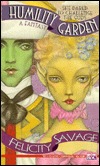
Fantastic Fantasy Finds: Humility Garden by Felicity Savage
HUMILITY GARDEN (1995)
It's difficult to describe this surreal dark fantasy. The characters aren't human, but humanoid, with feline, avian, and dragon-like qualities. The heroine, Humility Garden, lives in a land that mirrors both the Victorian and the French Revolution eras. She's a ghostier, an artist who murders, turning people into works of art, yet her story arc is a Brontean one of tragedy and triumph.
Then she meets Arity, who is from a race considered to be gods--winged and green-skinned and beautiful. He becomes her lover in this nightmarish and elegant world, where treachery is a common practice. Although the characters are basically all anti-heroes and not human, they have poignantly human qualities. The world of Salt is immoral and decadent, with its manners and murderous magic.
The sequel, Delta City, continues Humility's and Arity's story. The villain, Pati, a god and former lover of Arity's, now rules, Humility and Arity are separated, and a rebellion is brewing.
With its lyrical language and wildly imaginative world building and complicated characters, this duology is a treat for anyone looking for something a little different.
Subscribe to:
Comments (Atom)